Page 02

Home / Services

Ten services, one engineering standard

Each service below is described by what is actually delivered. Scope, acceptance criteria and limits are agreed in writing before work begins, and we state what a service does not include as clearly as what it does.

  1. 01

    Custom software development

    Applications built around a specific operational process rather than adapted from a generic product.

    We start from the workflow that actually runs the business, model it explicitly, and build software that reflects it. Delivery includes a documented domain model, automated tests covering the behaviour that matters, and a codebase structured so that later changes stay local instead of rippling through the system.
  2. 02

    Web application development

    Browser-based interfaces and the APIs behind them, designed for clarity, speed and accessibility.

    Interfaces are built responsively for desktop, tablet and mobile, verified against keyboard and screen-reader use, and measured against performance budgets. Backend interfaces are versioned and documented so other teams can integrate without guesswork.

  3. 03

    Cloud solutions

    Environments, pipelines and infrastructure defined in code and reproducible on demand.

    We design cloud environments with clear separation between development, staging and production, automated provisioning, and deployment pipelines that make releases routine. Cost, scaling behaviour and failure modes are considered at design time rather than after the first incident.

  4. 04

    IT consulting

    Independent technical assessment of an architecture, a codebase or a delivery approach.

    An engagement produces a written analysis: what the system does today, where the structural risks are, which constraints are real and which are historical, and a sequenced set of options with their trade-offs. We do not recommend work we would not be prepared to justify in detail.

  5. 05

    System integration

    Reliable, observable data movement between applications that were never designed to talk to each other.

    We define explicit contracts between systems, add validation at the boundaries, and build in retries, idempotency and dead-letter handling so failures are recoverable. Integration health is instrumented so problems are visible before they reach users.

  6. 06

    UI/UX design

    Interface and interaction design grounded in how the software is actually used.

    Work covers user flows, information architecture, interface design and a component library implemented in code. Design decisions are validated with the people who will use the system, and accessibility requirements are part of the specification from the start.

  7. 07

    Software modernisation

    Incremental replacement of ageing components while the system stays in service.

    We begin by documenting current behaviour and adding tests around it, then replace components in stages behind stable interfaces. This keeps the system releasable throughout and avoids the risk concentration of a single large rewrite.

  8. 08

    Technical support and maintenance

    Ongoing care of software in production under an agreed and measurable scope.

    Includes monitoring and alerting, dependency and security updates, defect resolution, performance review and periodic reporting. Response expectations, escalation paths and covered scope are defined in writing before the arrangement begins.

  9. 09

    Quality assurance

    Testing designed alongside the feature, automated where repetition makes it valuable.

    We build layered test suites — unit, integration, end-to-end — and run them on every change. Exploratory testing, load testing and regression verification are applied where the risk profile justifies them, with results reported in terms of what they do and do not cover.

  10. 10

    Cybersecurity-oriented development

    Security practices applied during construction rather than reviewed at the end.

    Covers threat modelling for new features, secure authentication and authorisation design, input validation, encryption in transit, dependency and vulnerability scanning in the pipeline, secret management, and audit logging. We describe the protections implemented and their limits; we do not present security as a guarantee.

Engagement models

Three ways to work together

Dedicated team

A stable group of engineers working continuously on your product, integrated with your planning cycle.

Defined project

A scoped piece of work with agreed deliverables, acceptance criteria and a handover at the end.

Advisory engagement

Focused technical review, architecture support or delivery guidance without taking over implementation.

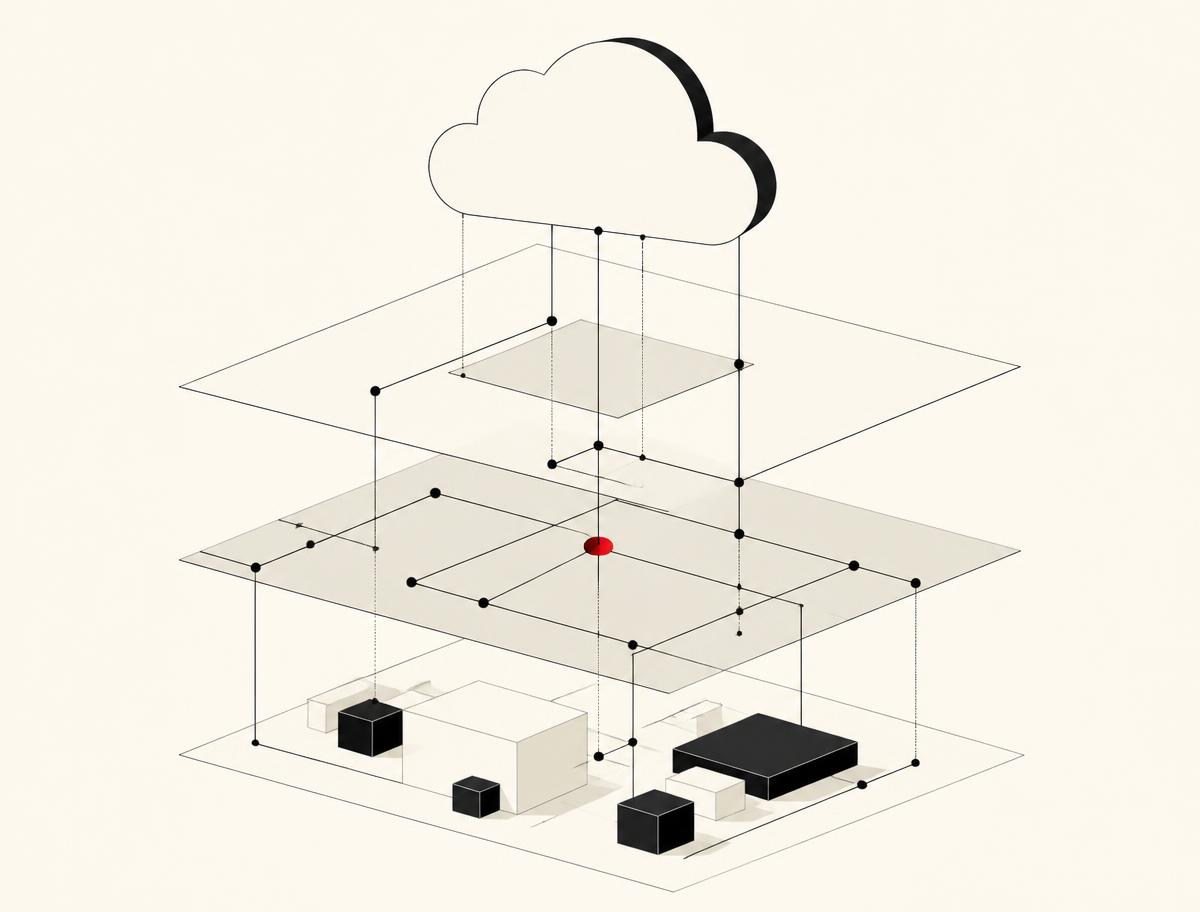
Diagram showing cloud services layered above network routes and underlying infrastructure components

Enquiries

Discuss a service

Describe the system, the constraint and the outcome you need. We will respond with our reading of the scope and the questions that would need answering before an estimate is meaningful.

[email protected]